What to check before you book quad biking in Dubai
Before booking quad biking dubai, slow down and look past the photos. A desert ride can feel very different depending on the terrain, the pace, the group size and the safety routine. The best preparation is not complicated. It is a short review of the practical details that affect comfort, timing and peace of mind.
Start with the ride itself. Quad biking takes place on open desert ground, where sand can be firm in one stretch and soft in another. A route that suits a first timer should allow space to learn how the quad turns, brakes and responds on sand. More experienced riders may want longer stretches with fewer stops. Ask what kind of ground the ride covers and how the pace is handled when the group has mixed abilities. That one question often reveals more than a long description.
The riding setup
Check whether the ride is guided and how instructions are given at the start. A clear briefing matters because a quad is not handled like a car. Body position, steering, braking and distance from other riders all affect control. A good introduction should explain these points in plain language before anyone moves off. If the explanation is rushed or unclear, that is a sign to ask more questions.
Protective gear is another point worth reviewing. A helmet should fit properly, sit level and stay secure. Gloves can help with grip, and closed footwear is sensible because feet can brush against the vehicle or rough ground. Loose scarves, wide sleeves and dangling accessories are best avoided. Sun protection also matters in the desert, especially when the ride includes stops in open areas. Bring eye protection if bright sand or wind is likely, and carry water for before or after the ride rather than relying on memory.
The vehicle condition deserves attention too. A quad should feel stable, with responsive brakes, correct tyre pressure and controls that work as expected. Riders do not need to inspect mechanical parts in detail, but they can notice obvious issues such as a loose handlebar, a damaged control or a machine that sounds irregular. If something feels wrong once the ride begins, stop and say so instead of trying to push through it. Mechanical repairs are a job for a qualified professional, not something to attempt at the roadside or in the sand.
Where the booking fits in your day
Timing changes the experience more than many people expect. Morning light can be softer and the air may feel calmer, while later rides can bring a different look to the dunes. Heat, wind and daylight all shape the pace. When comparing options, look at the start time, the expected duration and what happens before and after the ride. A short transfer, a safety briefing and time to get ready all form part of the outing, even if the main focus is the riding.
Transport is a practical detail that can affect the whole booking. Confirm where the ride starts and how riders get there. If pickup is included, check the pickup area, the meeting point and what to do if the group is late. If getting there independently, allow extra time and make sure the route is clear before setting off. Desert roads and open areas can be disorienting after dark, so arriving with time to spare is wiser than cutting it close.
AL Qudra Tours may come up while comparing desert options, so keep the same questions in mind when reading any provider name. The aim is not to chase the most dramatic wording. It is to match the ride to the people going, the time available and the level of comfort expected.
Who can ride and who should sit out
Not every quad is suitable for every rider. Age, height, weight, confidence and physical condition all play a part. A rider who needs to stretch comfortably to reach the controls will have better balance than one who is straining. If children are part of the group, check whether they ride independently or as passengers, and what rules apply. Passenger arrangements vary, and a child should never be placed on a machine simply because there is space.
Anyone with a back injury, joint problem, balance issue or recent surgery should take extra care before joining. The movement of a quad over sand can be uneven, and sudden bumps are part of the terrain. It is reasonable to ask whether the route has rough sections and whether the ride can be adjusted. Medical advice should come from a qualified professional, not from a booking page or a casual conversation.
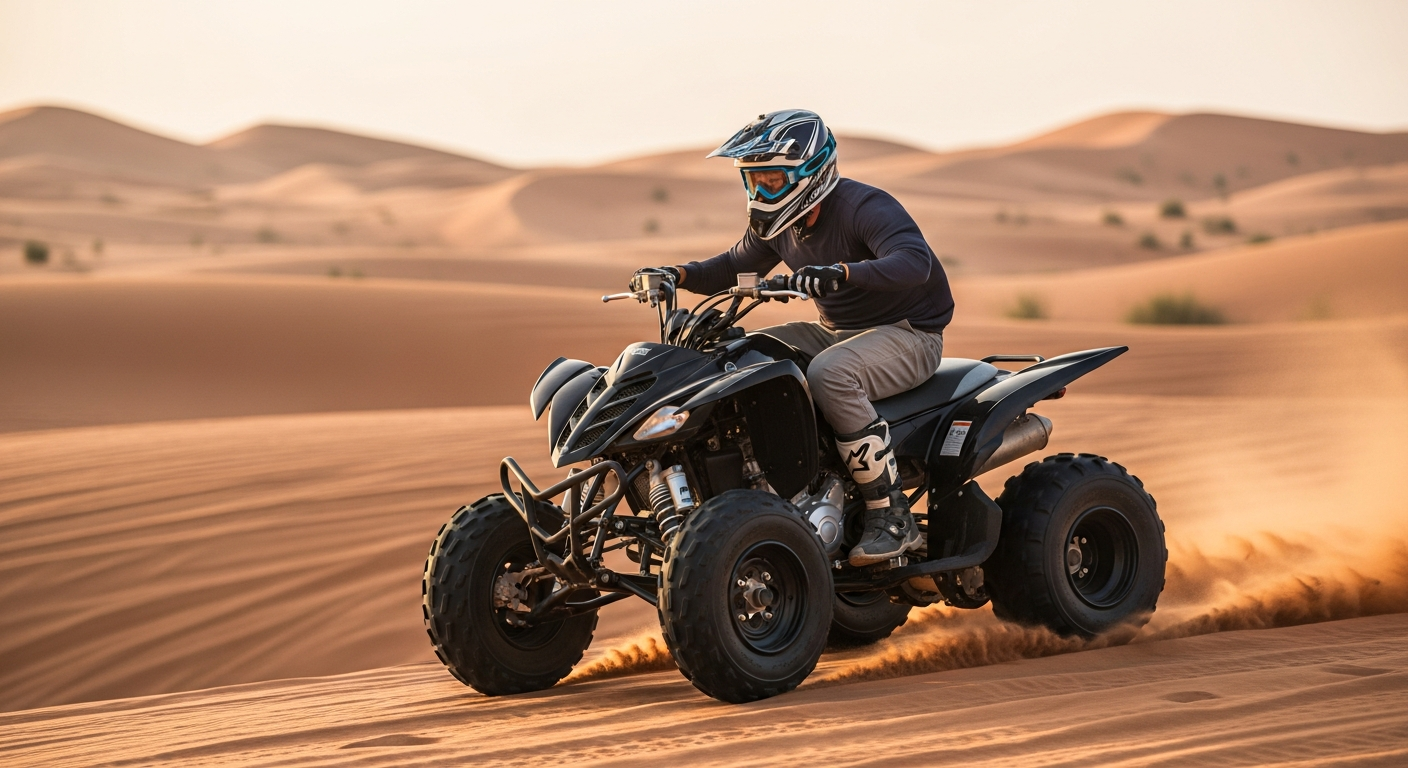
Clothing is part of this decision as well. Light, breathable layers work better than heavy items in warm weather, but skin still needs cover from sun and sand. Long trousers and a tucked-in top reduce the chance of fabric catching. Shoes should cover the foot and grip well. Avoid flip flops, sandals and anything that can slip off. Hair that can fall across the face should be tied back, especially on windy days.
What the booking should say clearly
Before paying, read the booking details with care. The words that matter are the ones that describe what is included, what is excluded and what happens if plans change. A vague listing can leave riders unsure about basic points at the meeting point. Clear wording is usually a better sign than polished promises.
- Route and pace. Check whether the ride follows open desert, dunes, a set circuit or a mixture. Ask how speed is managed and whether stops are built in.
- Duration and group size. Confirm the riding time, not just the total outing time, and ask whether the group is shared or private.
- Safety brief and supervision. Look for a briefing before departure and a guide who stays with the group rather than leading from far ahead.
- Gear and requirements. Check what is supplied, what riders should bring and whether there are age, height or passenger rules.
- Changes and cancellations. Read the terms for weather, late arrival and rescheduling so expectations are clear from the start.
Questions that save awkward moments
A few direct questions can prevent most booking surprises. Ask what happens if a rider feels uncomfortable during the ride. A sensible answer should include a way to slow down, stop or return without pressure. Ask how the group handles different speeds, because a mixed group can otherwise become tense. Ask whether photos or video stops are part of the route, since these affect riding time and the rhythm of the outing.
It is also worth asking about the language used for instructions. If the briefing is not in a language everyone understands, safety details may be missed. Clear hand signals and simple demonstrations can help, but they work best when the basics have already been explained. Riders should feel able to ask for repetition rather than pretend they understood.
AL Qudra Tours is one name to keep in view while comparing choices, but the decision should rest on the ride details. A provider name alone does not tell a rider what the terrain is like, how the briefing works or whether the timing fits the day. Those points deserve direct answers.
Matching the ride to your comfort level
First timers should favour a calmer ride with a proper introduction and a route that builds confidence. There is no benefit in choosing the fastest option if most of the group is tense. More confident riders may prefer longer sessions with fewer pauses, yet they still need clear rules on spacing and turns. Sand riding rewards control more than speed, especially when the surface changes without warning.
Families and mixed groups should think about the slowest rider rather than the keenest one. A ride that leaves someone struggling is rarely enjoyable for the rest. If the group includes people who want different levels, consider separate sessions instead of forcing one pace. The extra planning often leads to a better day.
Booking quad biking should feel straightforward once the main points are clear. Check the route, the briefing, the gear, the timing, the rider rules and the terms. Then choose the option that fits the group honestly. Desert riding is at its best when the pace feels controlled, the expectations are plain and everyone knows what to do before the engines start.